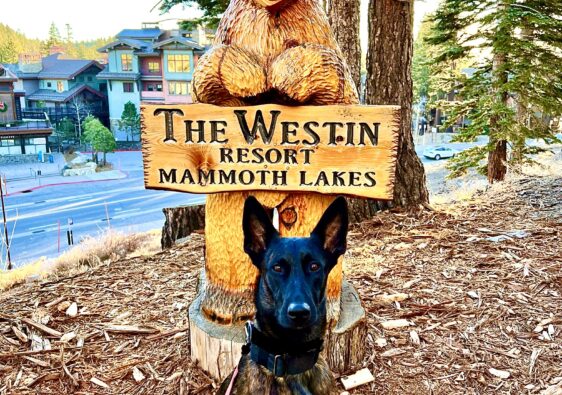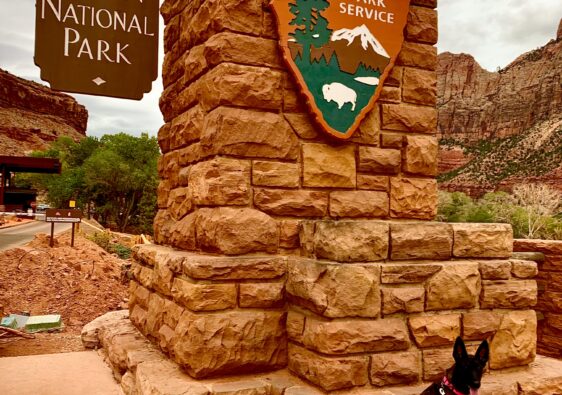
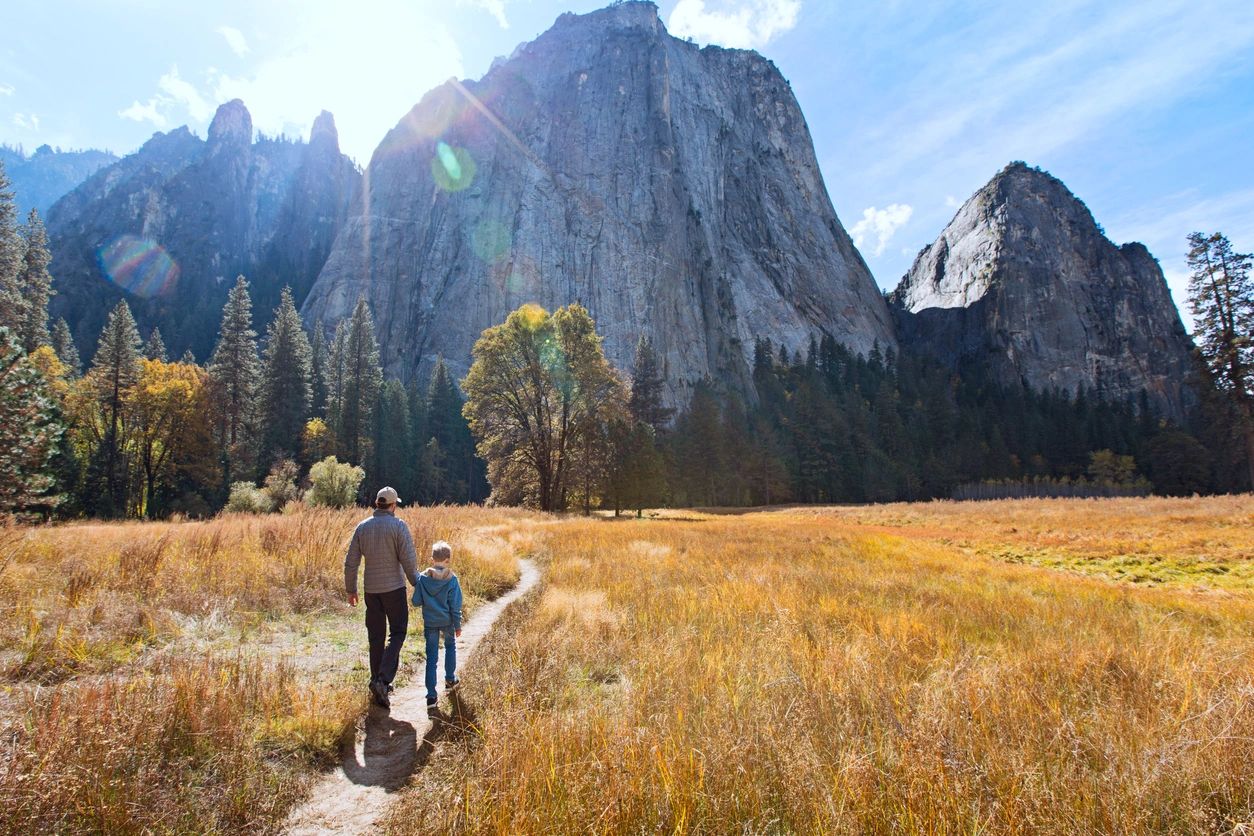
Planning a U.S. National Park trip with your dog? Discover which National Parks allow dogs on trails, which have restrictions, and which may be better explored without your pup.
Planning a National Park adventure with your dog? Before you load up the car, there’s one very important thing to know:
Not all National Parks are dog-friendly.
Some National Parks allow dogs on hiking trails, while others restrict them to paved areas, campgrounds, roads or developed areas. And in a few parks, your pup may have to sit this one out altogether.
If you’re traveling with your dog, this guide will help you discover some of the more dog-friendly National Parks in the U.S., understand important pet restrictions and decide which parks may be worth adding to your dog-friendly road trip itinerary.
Because if you’ve ever planned a vacation around your dog, you already know that:
“Dogs allowed” doesn’t necessarily mean “dogs can go everywhere.” 😂
And nowhere is that more important to understand than our National Parks.
Some parks offer miles and miles of trails where dogs can join their humans, while others basically say:
“We love dogs…just not on the trails.” 🐶
So before you load the dog, hiking gear, water bowls and approximately 47 pounds of snacks into the car, let’s look at what kind of National Park adventure you may actually be able to have with your dog.
Important: There isn’t an official National Park Service ranking of the “most dog-friendly” or “least dog-friendly” National Parks. The categories in this article are based on current NPS pet-access rules and how much opportunity dogs have to actually explore with their humans. Park rules can change, so always check the individual park’s current pet regulations before you go.
🐾 Quick Answer: Which National Parks Offer Lots of Dog-Friendly Trail Access?
If your main goal is to hike and explore with your dog, some National Parks worth researching first include:
- New River Gorge National Park & Preserve — West Virginia
- Shenandoah National Park — Virginia
- Acadia National Park — Maine
- Cuyahoga Valley National Park — Ohio
- White Sands National Park — New Mexico
- Congaree National Park — South Carolina
- Petrified Forest National Park — Arizona
These parks still have individual rules and restrictions, but they generally offer significantly more opportunities for dogs to explore with their people.
On the other hand, famous parks such as Yellowstone, Yosemite, Zion, Bryce Canyon and Rocky Mountain National Park have much more restrictive pet policies.
And that’s exactly why it’s important to look beyond simply asking:
“Are dogs allowed?”
The better question is:
“Where can my dog actually GO?”
🐾 National Parks With Lots of Dog-Friendly Trail Access
These are some of the National Parks worth researching if your goal is to actually hike and explore with your dog.
🐾 New River Gorge National Park & Preserve — West Virginia
Talk about a dog-friendly win!
Pets are allowed on all trails at New River Gorge National Park & Preserve, as long as they’re kept on a physical leash no longer than six feet.
Dogs aren’t allowed inside park buildings or visitor centers, but when it comes to hitting the trails together, this park offers dog travelers something pretty special.
That “all trails” rule is exactly what many dog travelers hope to find.
What this means for dog travelers: If you’re looking for a true hiking adventure with your dog, New River Gorge gives you a lot of opportunities to explore together.
🐾 Shenandoah National Park — Virginia
Shenandoah is another standout for dog travelers.
Dogs are allowed on most of the park’s 500+ miles of trails, with fewer than 20 miles of trails closed to pets.
That’s a pretty impressive amount of hiking territory for you and your four-legged adventure buddy!
Dogs must remain on a physical leash no longer than six feet, and there are a few specific trails where pets aren’t permitted.
You’re also sharing the Blue Ridge Mountains with wildlife such as bears, skunks and snakes.
So bring the leash, bring the water and keep those doggy noses out of trouble!
What this means for dog travelers: With dogs permitted on most of Shenandoah’s extensive trail system, this park offers considerably more hiking opportunities with your pup than many National Parks.
🐾 Acadia National Park — Maine
Acadia offers dog travelers quite a bit to explore.
Dogs are welcome on about 100 miles of hiking trails and 45 miles of carriage roads, although there are trails and areas where pets aren’t permitted.
Dogs must remain on a leash no longer than six feet.
And Acadia even has a B.A.R.K. Ranger program! 🐾
👉 Want to know more about B.A.R.K. Rangers? Read our guide: Move Over, Junior Rangers! Meet the National Park B.A.R.K. Rangers.
Just remember that wildlife and environmental conditions can create real hazards for curious pups. Keep your dog close, choose trails appropriate for your dog and pay attention to current conditions and park restrictions.
What this means for dog travelers: Mountains, ocean views, carriage roads and many trails your dog can actually explore with you make Acadia worth researching for a dog-friendly National Park trip.
🐾 Cuyahoga Valley National Park — Ohio
Here’s one I definitely don’t want dog travelers overlooking!
Cuyahoga Valley National Park allows leashed pets on more than 100 miles of hiking trails, as well as the multi-use Ohio & Erie Canal Towpath Trail.
There are a few restrictions. Dogs aren’t allowed on the East Rim mountain bike trails, during sledding activities at Virginia Kendall Hills, or inside park buildings and on the scenic railroad unless they’re service animals.
But with more than 100 miles of trails available to dogs?
That’s a lot of room to roam!
What this means for dog travelers: Cuyahoga Valley offers a substantial amount of trail access for people hoping to hike with their dogs.
🐾 White Sands National Park — New Mexico
Yes, you can bring your dog to White Sands!
Leashed pets can enjoy many areas of the park with you, making this an especially fun option for people who love unusual landscapes and want their dogs along for the adventure.
But there’s a BIG desert warning here:
HEAT.
White sand may look beautiful and inviting, but desert conditions can become dangerous for dogs.
Carry plenty of water, watch the weather and pay close attention to your dog’s paws and overall comfort.
Because a beautiful photo isn’t worth a burned paw—or an overheated dog.
What this means for dog travelers: It’s an incredible landscape, and sharing it with your dog can be pretty special when the conditions are right.
🐾 Congaree National Park — South Carolina
Congaree is another National Park where dogs can join you on the trails.
Pets are permitted on the park’s trails, including the boardwalk, as well as in campgrounds, provided they’re kept on leash.
But this is a hot, humid environment with ticks, snakes and plenty of wildlife.
So this is a:
“Bring your dog, but come prepared” kind of adventure.
What this means for dog travelers: Congaree offers broad trail access, but the environment itself should be part of your decision about whether conditions are appropriate for your particular dog.
🐾 Petrified Forest National Park — Arizona
Petrified Forest is another National Park that dog travelers should have on their radar.
Pets can accompany you on designated trails and in many outdoor areas of the park, as long as they’re leashed and current park rules are followed.
And there’s something extra fun here for dog lovers:
Petrified Forest has a B.A.R.K. Ranger program! 🐾
What this means for dog travelers: Desert scenery and opportunities for your dog to get out and explore make Petrified Forest worth researching—but as with any desert adventure, weather and heat matter.
🐾 Dog-Friendly…But With Some BIG Restrictions
These National Parks aren’t necessarily bad choices with a dog.
You just need to understand that your dog’s adventure may be very different from yours.
This is where that important distinction comes in:
Dog-friendly doesn’t always mean dog-hiking-friendly.
🐾 Grand Canyon National Park — Arizona
The Grand Canyon can still offer some memorable experiences with your dog—but access is limited.
Dogs are allowed on trails above the canyon rim, throughout developed areas and in certain campgrounds.
But dogs are not allowed below the rim, including the inner-canyon trails. They’re also not allowed on park shuttle buses.
So your dog can experience some spectacular Grand Canyon scenery with you—but you won’t be taking your pup on that epic hike down into the canyon.
What this means for dog travelers: If above-the-rim scenery and developed areas fit your plans, you may still enjoy visiting together. If hiking into the canyon is the reason for your trip, you’ll need a different plan for your dog.
🐾 Yosemite National Park — California
Yosemite is breathtaking, but dog access is much more limited than many visitors expect.
Dogs can accompany you in developed areas, on fully paved roads, sidewalks and bike paths, and in some campgrounds—but most unpaved trails are off-limits to pets.
So yes, your dog can experience parts of Yosemite with you.
But if your idea of a Yosemite vacation involves hiking miles of wilderness trails together, this probably isn’t the National Park experience you’re imagining.
What this means for dog travelers: Think developed areas, paved routes and sightseeing rather than a traditional dog-hiking vacation.
🐾 Zion National Park — Utah
Zion is spectacular—and we absolutely loved visiting this area.
But when it comes to bringing your dog, you need to know the rules.
Dogs are permitted on the Pa’rus Trail, and in certain developed areas such as roads, parking areas, campgrounds and picnic areas.
But the Pa’rus Trail is the only Zion trail open to pets.
And there’s another very important warning:
Keep your dog out of the Virgin River.
Zion National Park actively monitors for harmful cyanobacteria and cyanotoxins in the Virgin River, and cyanotoxins may be present at any time of year. Keep your dog out of the water and check Zion National Park’s current cyanobacteria information before your visit.
What this means for dog travelers: Your dog can enjoy Pa’rus Trail and certain developed areas with you, but don’t expect to hike Zion’s famous trails together—and take the water warning seriously.
🐾 Bryce Canyon National Park — Utah
Bryce Canyon holds a special place in our hearts, and we’ve experienced this one with our own dog.
But Bryce is another National Park where understanding the pet rules is important.
Dogs are allowed on certain paved surfaces, including paved viewpoints, roads, parking areas, campgrounds and designated paved portions of the Rim Trail and Shared-Use Path.
They aren’t allowed on the park’s unpaved trails.
The good news?
You can still experience those incredible hoodoos together.
And if your pup wants to earn some National Park bragging rights, Bryce also has a B.A.R.K. Ranger program! 🐾
What this means for dog travelers: Think “scenic adventure” rather than “dog hiking destination.”
And if you want to research longer dog-friendly hiking opportunities nearby, Red Canyon is managed by the U.S. Forest Service and may offer another option. Always check its current pet and trail rules before you go.
🚫 Famous National Parks With Very Limited Pet Access
Now for parks where you may want to think carefully about your plans if the whole point of your trip is exploring with your dog.
🐾 Yellowstone National Park — Wyoming, Montana & Idaho
Let’s talk about one of the biggest names in the National Park world.
Yellowstone.
Geysers. Wildlife. Waterfalls. Mountains. Thermal features.
Absolutely spectacular.
But pet access?
Very limited.
Pets are restricted to developed areas and must remain within 100 feet of roads, parking areas and campgrounds. They must be physically controlled at all times.
Dogs are not allowed on hiking trails, boardwalks, in the backcountry or in thermal areas.
Even being carried in a backpack or stroller doesn’t get around those restrictions.
And those restrictions aren’t simply inconvenient. They help protect pets from dangerous encounters with wildlife and from Yellowstone’s thermal areas, where hot springs can cause severe or fatal burns.
Those boardwalks and trails are also where you’ll experience many of Yellowstone’s most famous attractions.
What this means for dog travelers: Yellowstone may work if your plans can accommodate its very limited pet-access areas, but it isn’t a park where you can spend the day hiking the famous trails with your dog. If your trip is centered around your dog participating in the adventure, read Yellowstone’s current pet rules carefully before deciding whether this is the right trip for your pup.
🐾 Isle Royale National Park — Michigan
This one is about as restrictive as it gets.
Ordinary pets are not permitted on the island or on park-bound boats.
Isle Royale is an isolated ecosystem, and keeping outside animals away helps protect the island’s wildlife and natural environment.
So if you’re dreaming of hiking Isle Royale with your dog, unfortunately…
Your pup will have to sit this one out.
And sometimes that really is the responsible choice.
🐾 Channel Islands National Park — California
This one is especially important for California dog travelers to understand.
Pets are not allowed on the five park islands or inside the mainland visitor center in Ventura.
That means your pup can’t hop on the boat and explore the islands with you.
It’s a spectacular National Park—but this is one adventure where your dog will need to stay home or have other safe arrangements.
And that’s okay.
The goal isn’t simply to take our dogs everywhere. It’s to take them on adventures they can safely enjoy.
If you’re looking for a dog-friendly Ventura-area adventure instead, there are plenty of other options to consider—including Ventura Harbor and Harbor Cove Beach.
🐾 Rocky Mountain National Park — Colorado
Rocky Mountain National Park is another famous destination that dog travelers need to understand before planning a trip.
Pets are not permitted on the park’s trails, tundra or meadows.
Dogs are limited to areas such as roads, parking areas and developed campgrounds.
That means if your dream is to hike through Rocky Mountain National Park with your dog, this isn’t going to be the adventure you’re imagining.
What this means for dog travelers: You can still experience portions of the park with your dog in permitted developed areas, but this isn’t a destination for hiking the park’s trails together.
🐾 Looking for a National Park Where You Can Hike With Your Dog?
If your number-one goal is:
“I want to hike with my dog.”
Some parks worth researching include:
- New River Gorge National Park & Preserve
- Shenandoah National Park
- Acadia National Park
- Cuyahoga Valley National Park
- Congaree National Park
- White Sands National Park
- Petrified Forest National Park
These aren’t the only possibilities, and they aren’t presented as a ranking. They’re simply places where current pet-access rules provide considerably more opportunities to explore with a dog than many other National Parks.
And remember: even within a dog-friendly National Park, not every trail, facility or activity will necessarily be open to pets.
🐶 The Biggest Lesson?
Don’t plan your trip around the words:
“Dogs allowed.”
Plan around:
“Where can my dog actually GO?”
That’s the question that can make the difference between an amazing dog adventure and a vacation where your pup can participate in very little of what you planned.
And if you discover that your dream National Park isn’t very dog-friendly?
That doesn’t necessarily mean giving up on the trip.
It may mean changing the itinerary, looking for nearby dog-friendly alternatives or deciding that this particular adventure is one your dog would be better off sitting out.
Sometimes being willing to change the plan leads to an adventure you never would have discovered otherwise. 🐾❤️
🐾 Look Beyond the National Park
National Parks aren’t the only special places worth exploring.
National Monuments, National Preserves, National Recreation Areas, National Seashores, National Forests, State Parks and other public lands may have different pet policies and sometimes offer opportunities that work better for travelers with dogs.
🐾 Looking for more places to explore?
If a National Park’s pet restrictions don’t work for the adventure you have in mind, check out Can’t Take Your Dog to a National Park? Try These Dog-Friendly National Treasures Instead! for some other places you and your dog may be able to explore together.
That doesn’t mean those places are automatically dog-friendly, either.
Always check the rules for the specific place you’re considering.
But if the National Park you originally wanted to visit doesn’t work well with your dog, expanding your search may lead you somewhere wonderful.
Because sometimes the best dog-friendly adventure isn’t the place you originally planned.
It’s the place you discover because you were willing to change the plan. 🐾❤️
🐕 Frequently Asked Questions About Dogs in National Parks
Are dogs allowed in National Parks?
Yes, but pet rules vary significantly from park to park.
Some National Parks allow dogs on many hiking trails, while others restrict pets to developed areas, paved surfaces, campgrounds or roads.
A few parks have extremely strict pet restrictions.
Always check the current rules for the specific National Park you’re planning to visit.
What National Parks allow dogs on trails?
Some National Parks with relatively broad trail access for dogs include New River Gorge, Shenandoah, Acadia, Cuyahoga Valley, White Sands, Congaree and Petrified Forest.
Individual trail restrictions can still apply, so always check the park’s current regulations before heading out.
What National Parks don’t allow dogs on trails?
Several popular National Parks have strict restrictions on pets.
Rocky Mountain National Park, for example, does not allow pets on its trails, tundra or meadows.
Other famous parks, including Yellowstone, Yosemite, Zion and Bryce Canyon, also have significant restrictions on where dogs can go.
Can I take my dog hiking in a National Park?
Sometimes!
It depends entirely on the National Park and, in some cases, the specific trail.
Never assume that dogs are allowed on a trail simply because they’re allowed somewhere else in the park.
Before your trip, check the current pet regulations for the exact area you plan to visit.
Are dogs allowed on National Park trails?
Some are!
This is one of the biggest differences between National Parks. Certain parks allow dogs on most or all trails, while others don’t allow pets on hiking trails at all.
If hiking with your dog is your priority, research the specific trail access before choosing your National Park.
What should I do if my dog isn’t allowed in the National Park?
First, look at what you actually hoped to do on the trip.
You may find a nearby National Monument, National Preserve, National Recreation Area, National Forest, State Park or other destination with pet rules that better fit your plans.
Or you may decide that this particular National Park adventure is one your dog should sit out.
Dog-friendly doesn’t always mean right for every dog, every day or every situation.
🐾 Before You Go: Check the Rules!
National Park pet regulations can change, and restrictions may vary by trail, season, campground or specific area.
Before you leave home:
✔️ Check the official National Park website
✔️ Read the current pet regulations
✔️ Check individual trail restrictions
✔️ Confirm campground and lodging rules
✔️ Bring plenty of water
✔️ Keep your dog leashed where required
✔️ Watch for heat, cold, wildlife and other hazards
✔️ Never leave your dog unattended in a hot vehicle
✔️ Pack out your dog’s waste
A few minutes of research can save you from arriving at the park and hearing:
“Sorry…your dog can’t go there.” 😳🐕
And nobody wants that.
🐾 Final Thoughts
National Parks are some of the most incredible places in America, but they’re not all created equal when it comes to traveling with dogs.
Some give your four-legged adventure buddy miles of trails to explore.
Others offer beautiful overlooks, paved paths and scenic drives.
And a few are better saved for a trip without your pup.
The trick is knowing the difference before you go.
So before packing the car, check the current rules, think honestly about what you want to do at the park and ask yourself our favorite question:
“Where can my dog actually GO?”
Sometimes the answer will be:
“Come along!” 🐾
Sometimes it will be:
“We need to change the plan.”
And occasionally it may be:
“This adventure is better without our dog.”
All three can be good decisions when they lead to safer, happier adventures for the dogs we love.
Happy travels and BIG PAWS up! 🐾❤️