When National Park pet restrictions change your plans, you may not have to give up the adventure. Sometimes a nearby dog-friendly alternative can give you the experience you were hoping for—with your dog by your side.
Have you ever planned a National Park trip, started reading the pet rules and suddenly thought…
Wait. My dog can go WHERE? 😂
We love our National Parks. They’re home to some of the most spectacular landscapes in the country, and many of their pet restrictions exist for very good reasons—to protect wildlife, fragile environments, other visitors and sometimes our dogs themselves.
But if hiking among giant trees, wandering through red-rock country or exploring mountain trails was the whole reason you wanted to go, discovering that your dog can’t join you can change the trip pretty quickly.
We’ve learned something important while traveling with our dogs:
Changing the plan doesn’t necessarily mean giving up the experience you were excited about.
Sometimes there’s another place nearby where your dog can actually get out of the car and explore with you.
And sometimes Plan B turns out to be pretty amazing.
It happened to us.
🐾 A Quick Note About the Alternatives in This Guide
We have personally visited some of the places in this guide with our dogs. We’ve experienced others without our dogs, and some are researched alternatives we haven’t visited yet.
We’ll tell you which is which.
We’re sharing these places as possibilities to help you begin your own trip planning—not as a guarantee that a destination, trail or activity will be appropriate for you or your dog.
Pet rules, trail conditions, road access, weather and wildlife activity can change. And dogs change, too. Age, health, fitness, paw condition, temperament and experience can all affect whether a particular adventure is appropriate.
Before you go, please do your own in-depth research using the official resources we’ve provided. Check current conditions and rules, and decide whether a destination fits the individual needs and abilities of both you and your dog.
Dog-friendly doesn’t automatically mean right for every dog, every day or every situation.
Now let’s find some adventures. 🐾
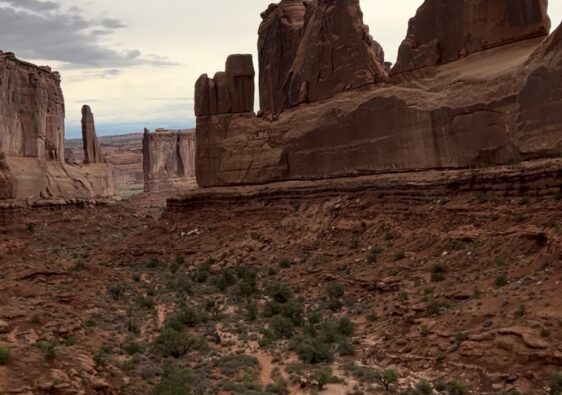
🏜️ Arches & Canyonlands → Dead Horse Point State Park, Utah
This is where the whole idea behind this article really began for us.
We had planned a trip to Arches and Canyonlands National Parks.
What we hadn’t planned for?
A puppy. 😂🐶
Suddenly, our National Park trip had a four-legged passenger, and the pet restrictions at Arches and Canyonlands meant we needed to rethink our plans.
That’s how we discovered Dead Horse Point State Park.
And what started as Plan B became one of our favorite discoveries of the trip.
We still got those spectacular Utah red rocks, enormous canyon views and wide-open landscapes—but we could experience much more of it with our puppy.
It taught us something we’ve never forgotten:
Sometimes the famous destination isn’t the only destination worth seeing.
🐾 Our experience: We’ve done this one with our dog! He was still a puppy when we visited.
🥾 Dog access: Dogs are permitted on hiking trails at Dead Horse Point but must remain leashed.
⚠️ Potential dangers: This is serious cliff country. Utah State Parks warns that dogs have been lost after chasing objects or small animals over cliff edges. Keep your dog leashed and under control. Desert heat, hot surfaces and limited shade also deserve careful consideration.
📍 Google Maps: Dead Horse Point State Park
🔎 Check before you go: Utah State Parks — current pet rules, weather, trail and park information.
👉 Want the whole story? Read We Planned for Arches & Canyonlands… But Our Puppy Led Us to Something Better.
🪨 Bryce Canyon → Red Canyon, Utah
If the hoodoos and colorful rock formations are what drew you to Bryce Canyon, don’t assume you have to give up that experience because you’re traveling with your dog.
Pet access at Bryce is limited primarily to paved areas and specific paved trails.
But nearby Red Canyon, part of Dixie National Forest, gives dog travelers another possibility—and Bryce Canyon National Park itself points visitors traveling with pets toward Red Canyon for additional dog-friendly hiking opportunities.
We’ve driven through Red Canyon with our dog on our way to Bryce and have a few pictures from that trip, but we haven’t hiked its trails together.
So we’re not going to pretend we’ve personally tested the hiking experience.
What we can tell you is that if the hoodoos and red-rock scenery were what excited you about Bryce, this is an alternative worth investigating.
🐾 Our experience: We’ve driven through Red Canyon with our dog but haven’t hiked the trails together.
🥾 Dog access: Dog-friendly hiking is available in the Red Canyon area. Check current U.S. Forest Service rules for your specific trail before heading out.
⚠️ Potential dangers: High elevation, changing weather, exposed terrain and seasonal snow or ice can affect conditions. Summer sun and warm trail surfaces can also matter for dogs.
📍 Google Maps: Red Canyon Visitor Center / chosen trailhead
🔎 Check before you go: U.S. Forest Service — Red Canyon Recreation Area.
🏔️ Yosemite → Mammoth Lakes, the Eastern Sierra & Devils Postpile
Yosemite is spectacular.
It’s also pretty limiting if what you imagined was hiking through the Sierra with your dog.
So instead of looking for another place that merely allows dogs, ask:
What were you hoping to experience?
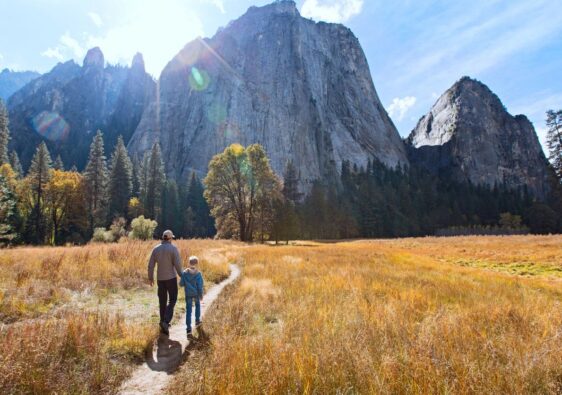
If the answer was mountain scenery, pine forests, beautiful trails and that incredible Eastern Sierra landscape, look toward Mammoth Lakes and Devils Postpile National Monument.
We’ve visited Devils Postpile several times without our dogs, and we’ve also hiked in the Mammoth area with our dog.
That’s one reason this alternative makes so much sense to us.
At Devils Postpile, leashed dogs can use trails, although there are special requirements for dogs using the Reds Meadow/Devils Postpile shuttle system.
Pair Devils Postpile with a carefully selected dog-friendly Mammoth-area hike, and suddenly the Sierra adventure you thought you’d lost may look very different.
🐾 Our experience: We’ve visited Devils Postpile several times without our dogs and have hiked elsewhere around Mammoth with our dog.
🥾 Dog access: Leashed dogs are permitted on trails at Devils Postpile. Transportation and shuttle requirements for pets can be different, so check current information before your trip.
⚠️ Potential dangers: High elevation, rapidly changing mountain weather, seasonal snow and ice, wildlife and strenuous terrain can all matter here. Some dogs—and people—may also be affected by altitude.
📍 Google Maps: Devils Postpile National Monument
📍 Google Maps: Convict Lake Loop
🔎 Check before you go: U.S. Forest Service Convict Lake Trail Information. In addition: National Park Service and Inyo National Forest for current access, shuttle, trail and pet information.
🌲 Sequoia & Kings Canyon → Giant Sequoia National Monument
If you dreamed of walking among giant sequoias with your dog, this is one of the most useful alternatives we’ve found.
Dogs aren’t allowed on trails in Sequoia and Kings Canyon National Parks—including the famous trails leading through many of the giant-tree groves.
But the surrounding National Forest lands operate under different rules.
One place we’re especially interested in is the Trail of 100 Giants in Giant Sequoia National Monument, part of Sequoia National Forest.
I’ve visited Giant Sequoia National Monument, although not with our dog, and I’ve been to Sequoia and Kings Canyon National Parks several times.
And if you’ve never stood beneath a giant sequoia before, photographs simply don’t prepare you for the scale of these trees.
This alternative isn’t about finding some random forest where dogs happen to be allowed.
It’s about preserving the thing you came to see:
Giant sequoias.
🐾 Our experience: I’ve visited Giant Sequoia National Monument, but not with our dog.
🥾 Dog access: Dogs can use trails in Sequoia National Forest under current Forest Service pet rules. Verify the current rules for Trail of 100 Giants before visiting.
⚠️ Potential dangers: Mountain weather, seasonal snow or road closures, wildlife and uneven trail surfaces can affect a visit. Watch for changing rules as you cross between National Park and National Forest/Monument lands.
📍 Google Maps: Trail of 100 Giants
🔎 Check before you go: U.S. Forest Service — Giant Sequoia National Monument and Trail of 100 Giants.
🌲 Redwood National & State Parks → Cal Barrel Road & Walker Road
Giant sequoias and coast redwoods are both enormous trees.
But they’re not the same experience.
I’ve been fortunate enough to visit both many times, and the towering coast redwood forests of Northern California have a beauty all their own.
When I was growing up, we traveled through Redwood National Park about every other year on our way to visit family in Oregon and Washington. Those forests made an impression on me then, and they still do.
So if someone dreams of walking beneath those towering old-growth coast redwoods, I wouldn’t casually send them to a completely different redwood grove and say:
Close enough.
Fortunately, we don’t have to.
Most trails within Redwood National and State Parks don’t allow dogs, but the National Park Service specifically points dog owners toward Cal Barrel Road in Prairie Creek Redwoods State Park and Walker Road in Jedediah Smith Redwoods State Park.
Both provide something pretty special:
A chance to walk beneath old-growth redwoods with your leashed dog.
That’s the experience we’re trying to preserve.
🐾 Our experience: I’ve visited Redwood National and State Parks many times without a dog. I may have traveled Walker Road during childhood trips, but we’re treating both of these dog walks as researched alternatives rather than firsthand dog experiences.
🐾 B.A.R.K. Ranger bonus: Dogs can also become B.A.R.K. Rangers at Redwood National and State Parks. Stop by a visitor center to learn about the program and take the pledge.
🥾 Dog access: Leashed dogs are permitted on Cal Barrel Road and Walker Road under current park rules.
⚠️ Potential dangers: This is wildlife habitat. Roosevelt elk, bears, coyotes and mountain lions live in the parks. Keep your dog leashed and give wildlife plenty of space. Wet conditions can also make surfaces slippery.
📍 Google Maps: Cal Barrel Road
📍 Google Maps: Walker Road
🔎 Check before you go: National Park Service — Redwood National and State Parks pet information.
🏔️ Rocky Mountain National Park → Mountain Hiking Outside the Park
Here’s a perfect example of why reading the pet rules before planning your trip matters.
Dogs aren’t allowed on Rocky Mountain National Park’s hiking trails, tundra or meadows.
So if your dream was:
“I want to hike through the Colorado mountains with my dog!”
…that’s a fairly important detail. 😅
But it doesn’t mean the Colorado mountain adventure has to disappear.
Rocky Mountain National Park itself points dog owners toward hiking opportunities outside the park, including areas within the surrounding Arapaho and Roosevelt National Forests.
Several possibilities caught our attention:
Indian Peaks Wilderness / Brainard Lake Area
Think mountain lakes, forests and dramatic Colorado peaks.
Potential hikes include areas around Lake Isabelle, Blue Lake and Mount Audubon.
Buchanan Pass Trail
This trail follows Middle St. Vrain Creek toward Red Deer Lake and Buchanan Pass, giving hikers another way to experience Colorado’s mountain landscape with their dog.
Crosier Mountain
Closer to Estes Park, Crosier Mountain offers forest hiking and panoramic mountain views.
We haven’t hiked any of these with our dog yet.
In fact, researching this article has made us want to go. 😂🐾
So we’re sharing these as researched possibilities, not personal trail recommendations.
Because rules and conditions can change, check the current Forest Service information for the exact route you’re considering before your trip.
🐾 Our experience: We haven’t visited these alternatives with our dog. They’re officially suggested or researched possibilities—and they’re now on our own adventure list.
🥾 Dog access: Dog rules vary by area and trail. Some wilderness areas require leashes. Check the current Forest Service regulations for the exact hike you choose.
⚠️ Potential dangers: Altitude deserves serious consideration here. High elevations can affect both people and dogs. Mountain weather can also change quickly, snow can linger—or occasionally occur surprisingly late or early in the season—and summer thunderstorms can bring dangerous lightning. Wildlife and strenuous terrain are additional considerations. Know the signs of altitude illness, turn around if you or your dog aren’t doing well, and consider hiking with a companion, particularly on remote or strenuous routes.
📍 Google Maps: Brainard Lake Recreation Area
📍 Google Maps: Buchanan Pass Trailhead
📍 Google Maps: Crosier Mountain Trailhead
🔎 Check before you go: U.S. Forest Service — Arapaho and Roosevelt National Forests.
🌄 Great Smoky Mountains → Waterrock Knob & Nearby Public Lands
Great Smoky Mountains National Park is one of America’s most visited National Parks.
But if you’re traveling with a dog, there’s something important to know:
Dogs are permitted on only two hiking trails inside the park—Gatlinburg Trail and Oconaluftee River Trail.
If you pictured hiking through those lush Appalachian mountains together, that’s a pretty big limitation.
Fortunately, the National Park Service itself points dog owners toward surrounding public lands when they’re looking for additional hiking opportunities.
And while researching those possibilities, we found one that immediately caught our attention:
Waterrock Knob on the Blue Ridge Parkway
This one made us want to pack the car. 😂
Waterrock Knob provides a high-elevation Appalachian experience with mountain forest and panoramic views. The summit reaches more than 6,000 feet, and on a clear day you can even see toward the Great Smoky Mountains.
So think about this:
You may not be able to hike most of the trails inside Great Smoky Mountains National Park with your dog…
…but you may be able to stand on another beautiful Appalachian mountain looking toward the Smokies together.
Now THAT is the kind of alternative we were hoping to find.
🐾 Our experience: We haven’t been here yet. This is a researched alternative—and writing about it is making us want to go!
🥾 Dog access: Dogs are allowed on Blue Ridge Parkway hiking trails but must remain on a leash no longer than six feet and under physical control.
⚠️ Potential dangers: The Waterrock Knob trail is short but steep, with uneven terrain. High elevation, rapidly changing mountain weather, fog, rain and slippery surfaces can affect conditions. Black bears also live along the Blue Ridge Parkway. The National Park Service specifically warns that dogs and bears can be a dangerous combination, so keep your dog leashed, stay alert and give wildlife plenty of space.
📍 Google Maps: Waterrock Knob Visitor Center
🔎 Check before you go: National Park Service — Blue Ridge Parkway / Waterrock Knob.
🌊 Channel Islands National Park → Catalina Island
This one is a little different—and that’s exactly why we like it.
I’ve visited islands within Channel Islands National Park, and I’ve also visited Catalina Island.
But I’ve never taken our dog to either.
Regular pets aren’t permitted on the islands within Channel Islands National Park.
So instead of asking:
“What’s another National Park where my dog can go?”
Let’s ask what you actually wanted from the trip.
If the answer was:
“I wanted a California island adventure!”
Then Catalina Island becomes interesting.
Catalina is geographically one of California’s Channel Islands, but it is not part of Channel Islands National Park.
And unlike the National Park islands, it is possible to travel to Catalina with a dog when you follow the ferry operator’s current pet requirements.
That does NOT mean we’re labeling the entire island dog-friendly.
There are ferry requirements, limitations on where dogs can go, transportation restrictions once you’re on the island and wildlife concerns—including bison and rattlesnakes—that deserve serious consideration.
This is a place to research carefully, not simply buy a ferry ticket because you saw the words “dogs allowed.”
🐾 Our experience: I’ve visited both Channel Islands National Park and Catalina Island, but never with our dog. We’re sharing Catalina as a researched dog-travel possibility.
🥾 Dog access: Dogs can visit portions of Catalina, but rules vary by location. Ferry operators also have specific requirements for transporting pets.
⚠️ Potential dangers: Wildlife is a major consideration. Catalina has free-roaming bison as well as rattlesnakes, and dogs need to remain controlled and away from wildlife. Heat, exposed terrain and limited transportation options with pets should also be considered.
📍 Google Maps: Avalon, Catalina Island
🔎 Check before you go: Catalina Express and Catalina Island Conservancy for current pet transportation, trail and access rules.
🌲 One More Southern Utah Possibility: Cedar Breaks National Monument
Cedar Breaks doesn’t need to pretend to be Bryce Canyon.
It has its own spectacular high-elevation landscape, colorful amphitheater and sweeping views.
Dog access is still limited, so this isn’t an alternative we’re including because dogs can suddenly go everywhere.
Instead, it’s another possibility for travelers already exploring southern Utah who want to experience dramatic scenery with their dog in some of the permitted areas.
Leashed dogs are currently allowed in certain paved areas and on the paved portion of Sunset Trail.
🐾 Our experience: We haven’t visited Cedar Breaks with our dog, so we’re treating this as a researched possibility.
🥾 Dog access: Limited. Verify exactly where dogs are currently permitted before visiting.
⚠️ Potential dangers: Cedar Breaks sits at very high elevation. Altitude, rapidly changing mountain weather, cold temperatures and seasonal snow can all affect a visit—even when lower-elevation Utah is warm.
📍 Google Maps: Cedar Breaks National Monument
🔎 Check before you go: National Park Service — Cedar Breaks National Monument.
🐾 Don’t Just Look for “Dogs Allowed”
This may be the biggest lesson we’ve learned while putting this guide together.
Don’t just find somewhere your dog is technically allowed. Find somewhere that preserves what you were excited about in the first place.
Wanted hoodoos?
We’ll find hoodoos.
Wanted giant sequoias?
We’ll find giant sequoias.
Wanted towering coastal redwoods?
We’ll put you underneath towering coastal redwoods.
Wanted Colorado mountain hiking?
Let’s find mountain trails.
Wanted lush Appalachian mountains?
Let’s look for a place where you and your dog can experience them together.
Wanted a California island adventure?
Let’s investigate an island you can actually reach with your dog.
Wanted red-rock Utah?
Well…
That one we know from experience. 😂🐶❤️
That’s the difference between finding somewhere that merely permits dogs and finding an alternative that may actually preserve the adventure you had in mind.
❤️ Sometimes Plan B Is the Adventure
We love National Parks.
This isn’t about avoiding them simply because we’re traveling with dogs.
Sometimes we’ll visit the National Park and enjoy the places where our dog is allowed.
Sometimes we’ll change the plan and explore somewhere nearby together.
And sometimes, after looking at the rules, terrain, weather, wildlife or our dog’s needs, we’ll decide that particular adventure is better experienced without our dog.
That’s okay, too.
The goal isn’t simply to take our dogs everywhere.
It’s to give them adventures they can safely enjoy.
So if a National Park’s pet restrictions don’t work for the trip you imagined, look around before giving up.
There may be another trail.
Another forest.
Another canyon.
Another island.
Another enormous tree waiting just down the road.
And every once in a while, the place you never planned to visit becomes the place you’re most grateful you found. ❤️🐾