Spectacular scenery, a beautiful road trip—and an important water danger every dog owner needs to know!
☀️ Note: When to Go: This is a great cool-season adventure from late fall through early spring, when temperatures are much more comfortable for exploring with your pup. We’d skip this one during the hot summer months and early fall—the heat can be tough on both you and your four-legged adventure buddy! 🐾
When we decided to use St. George, Utah, as our home base for exploring southern Utah, we knew Zion National Park had to be on our list.
After all, Zion is one of those places you’ve probably seen in photographs a hundred times.
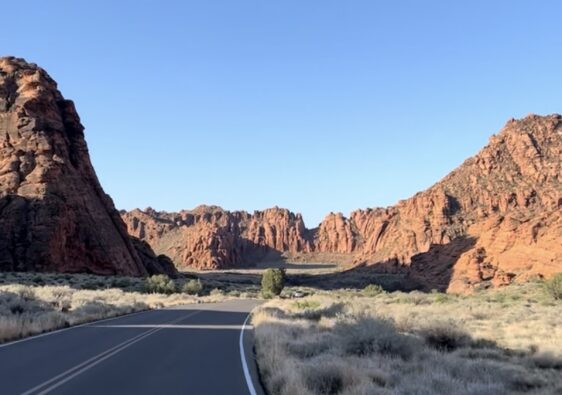
Towering red cliffs.
Narrow canyons.
Beautiful scenery.
Epic hiking.
And views that make you stop mid-sentence and say…
“Wow.”
But traveling with our dog meant we had something else to consider.
Safety.
And in Zion, there was one particular danger that completely changed our plans.
This post is based on our visit in October 2021, but we’re also including current National Park Service information because conditions can change.
Why We Used St. George as Our Home Base 🚗
One of the things we loved about our Utah trip was choosing St. George as our base camp.
Instead of packing up and moving hotels every few days, we could settle in, give our dog time to relax, and take day trips to the places we wanted to explore.
Zion was especially convenient because it’s just under an hour from St. George, depending on traffic and where you’re staying.
Sounds like an easy day trip, right?
Well…
Zion may be close, but that doesn’t necessarily mean you can show up late and expect everything to go smoothly. 😂
During our October visit, Zion was much busier than Bryce Canyon.
We waited in line to enter the park, and much of the parking was already full.
That was our first reminder:
Plan ahead!
The National Park Service currently advises visitors that parking can fill early throughout the year and recommends preparing for crowds.
Our Zion Trip Had Been Delayed Before 🐾
We actually wanted to visit Zion the year before our trip.
But we had heard about something that stopped us in our tracks:
Toxic cyanobacteria.
At the time, reports about dogs becoming seriously ill—and even dying—after exposure to toxic cyanobacteria in the Virgin River were extremely concerning.
So we decided not to take our dog.
When we returned the following year, we hoped the cooler fall temperatures might mean the problem had disappeared.
Unfortunately, we were wrong.
And we’re very glad we spoke with the park rangers before heading out.
The First Thing We Wanted to Do? Find a Ranger! 🧑✈️🐶
One of our goals during our visit was to find out whether Zion had a B.A.R.K. Ranger program.
We had just started collecting B.A.R.K. Ranger experiences and patches for our dog, so naturally, we were excited to add another one to her collection!
During our 2021 visit, a ranger told us the park was still working on its program.
Fast forward to today: Zion now has an official B.A.R.K. Ranger program! 🐾 The park provides guidance for dogs visiting Zion and encourages responsible pet ownership through the B.A.R.K. principles.
But before we could even go looking for a ranger…
A ranger noticed us.
And called us over.
For a split second, we thought:
“Uh-oh… what did we do?” 😂
Fortunately, we weren’t in trouble.
The ranger had seen our dog.
And she wanted to warn us.
The Warning That Changed Our Plans ⚠️
The ranger immediately told us about the toxic cyanobacteria concerns.
At the time of our visit, the park was monitoring the waterways and still finding concerning conditions.
The ranger explained the danger to dogs and told us heartbreaking stories about dogs that had become seriously ill after exposure and some had died quickly before they could get help.
That conversation completely changed our plans.
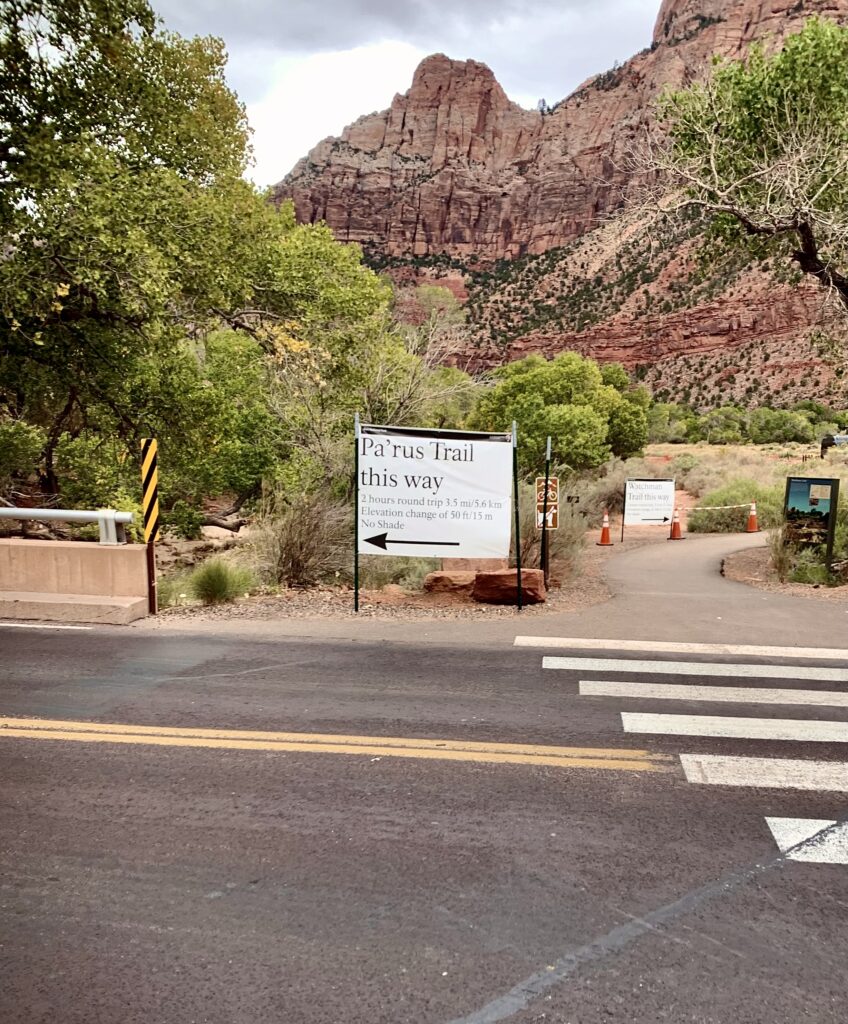
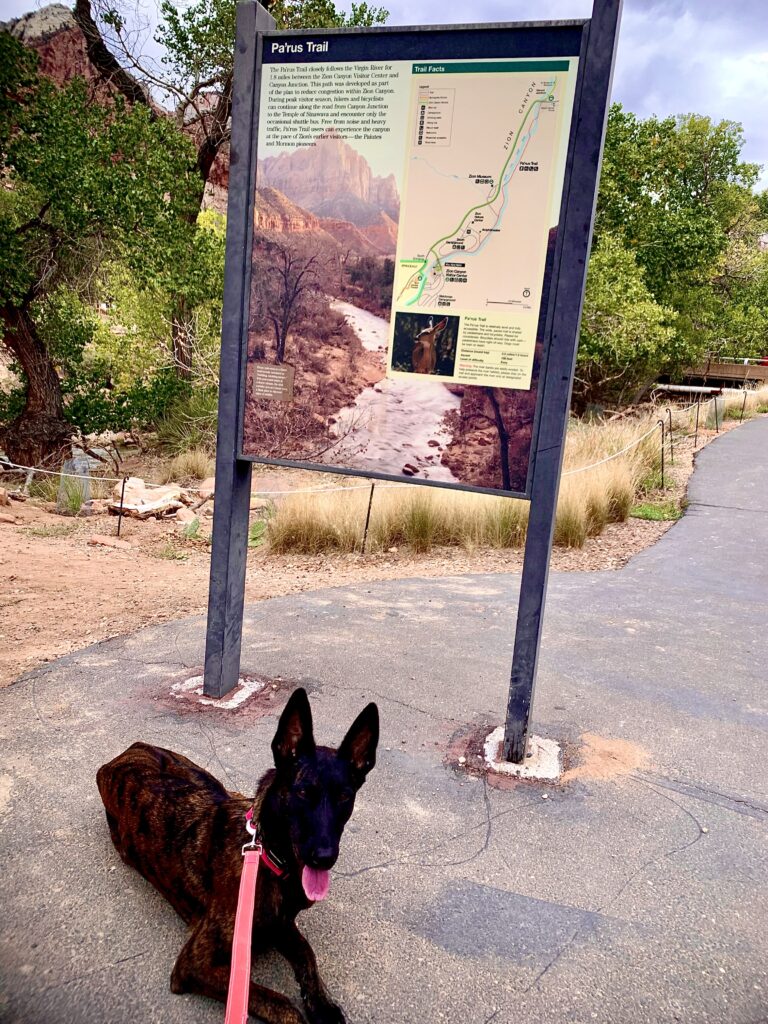
The Virgin River runs alongside parts of the Pa’rus Trail, which was the trail we had planned to walk with our dog.
And because dogs are naturally curious…
Well, you know how quickly a dog can decide that a river is the greatest thing they’ve ever seen. 😂
A quick splash.
A drink.
A curious sniff.
A wet paw followed by licking.
We simply didn’t want to take the chance.
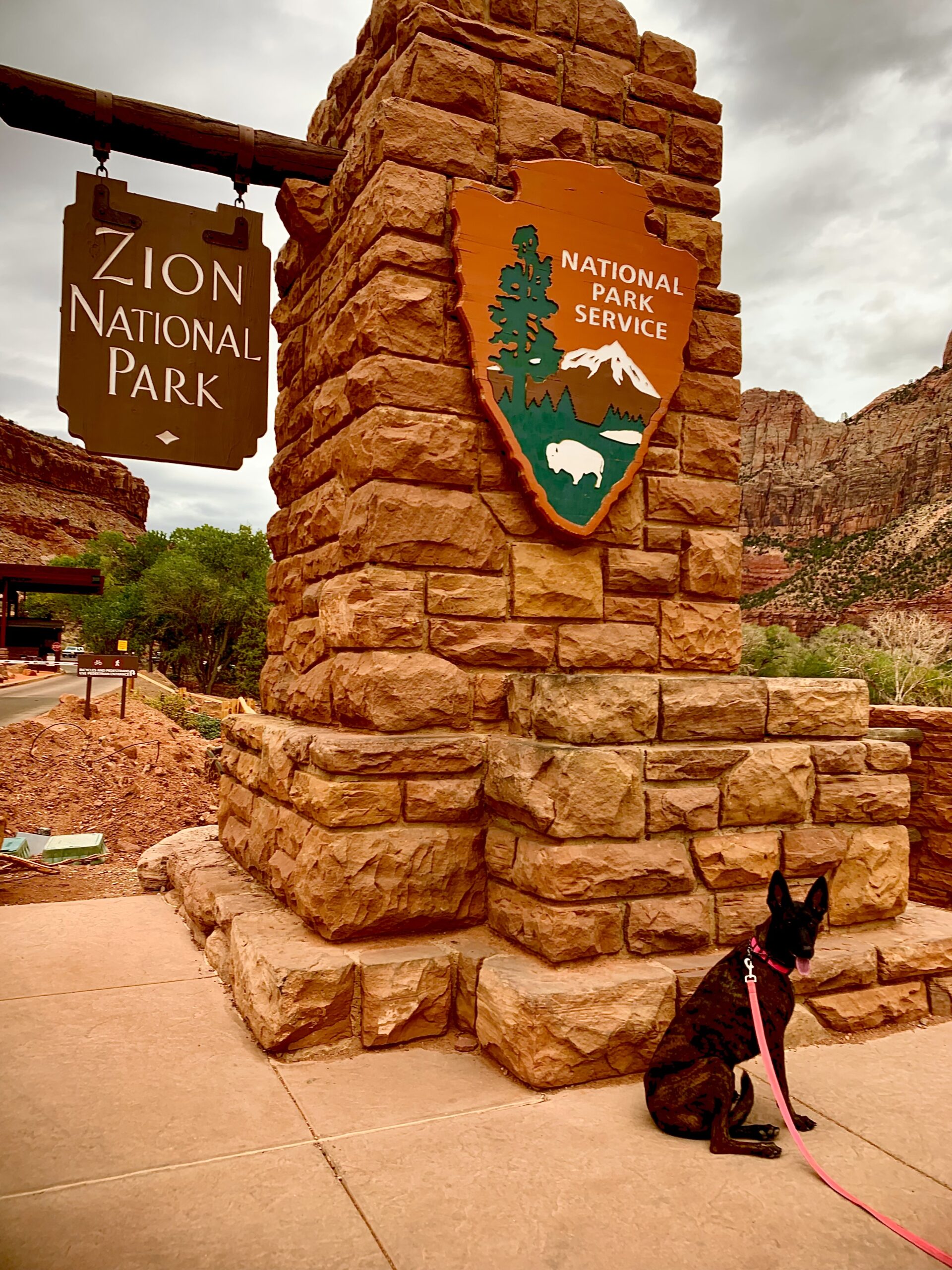
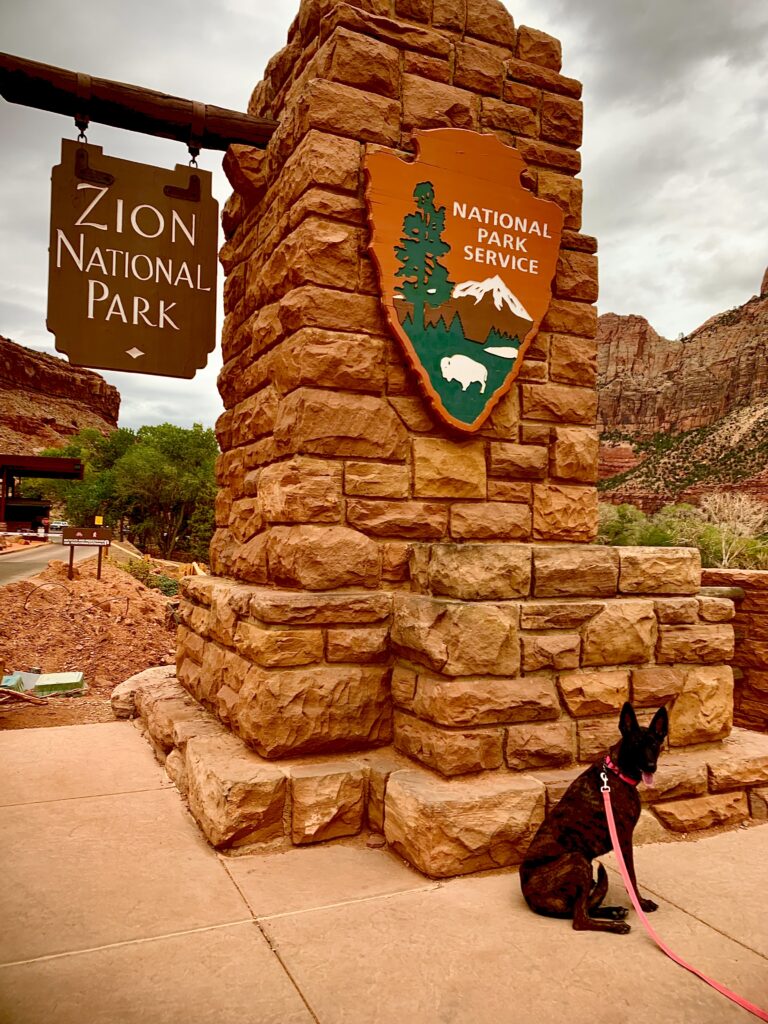
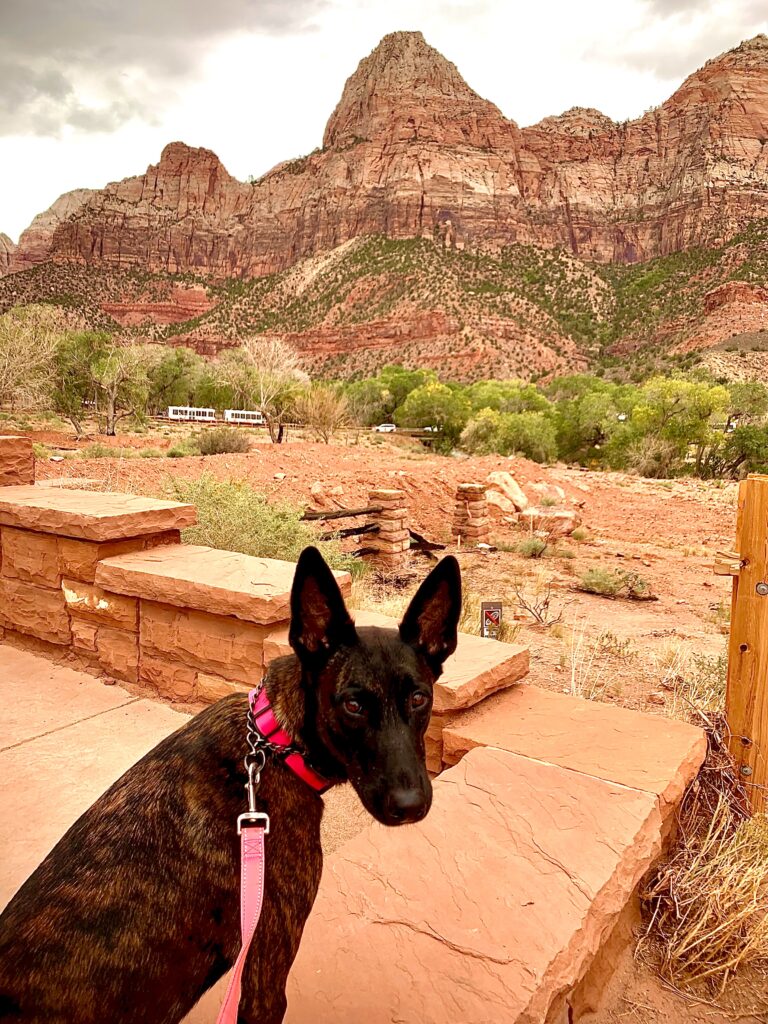
So we made the decision to take a few pictures and leave.
Was it disappointing?
Of course.
Were we disappointed in Zion?
Absolutely not.
We were grateful.
The ranger had taken the time to stop us, talk with us, and make sure we understood the potential danger.
Honestly, we give the Zion park rangers an A+ for caring about the safety of visitors and their dogs. ❤️🐾
What Is Toxic Cyanobacteria? 🦠
Cyanobacteria, sometimes called blue-green algae, are naturally occurring bacteria that can produce harmful toxins called cyanotoxins.
At Zion, cyanobacteria can grow in still and flowing water and may attach to rocks, plants, riverbanks, and other surfaces.
The National Park Service says dogs are especially vulnerable because they may drink contaminated water or interact with toxic material in ways that are difficult for us to control.
The important thing for dog owners to remember is this:
Don’t assume clear water means safe water.
The National Park Service actively monitors for harmful cyanobacteria and cyanotoxins in Zion’s waterways, and conditions can change.
When Should You Visit Zion With Your Dog? Think Cool Weather! 🍂🐾
Zion’s stunning red rocks may look beautiful, but they can also become very hot under the sun. Hot pavement, rocks, and trails can burn your dog’s paws, and warm temperatures combined with hiking and little shade can quickly lead to overheating. For that reason, we recommend planning a dog-friendly visit during the cooler months—late fall, winter, or early spring—while always checking the weather and ground conditions before heading out. Even on a day that feels comfortable to us, the ground can be much hotter for four paws!
Can You Take Your Dog Hiking at Zion? 🐶
Yes—but there are important restrictions.
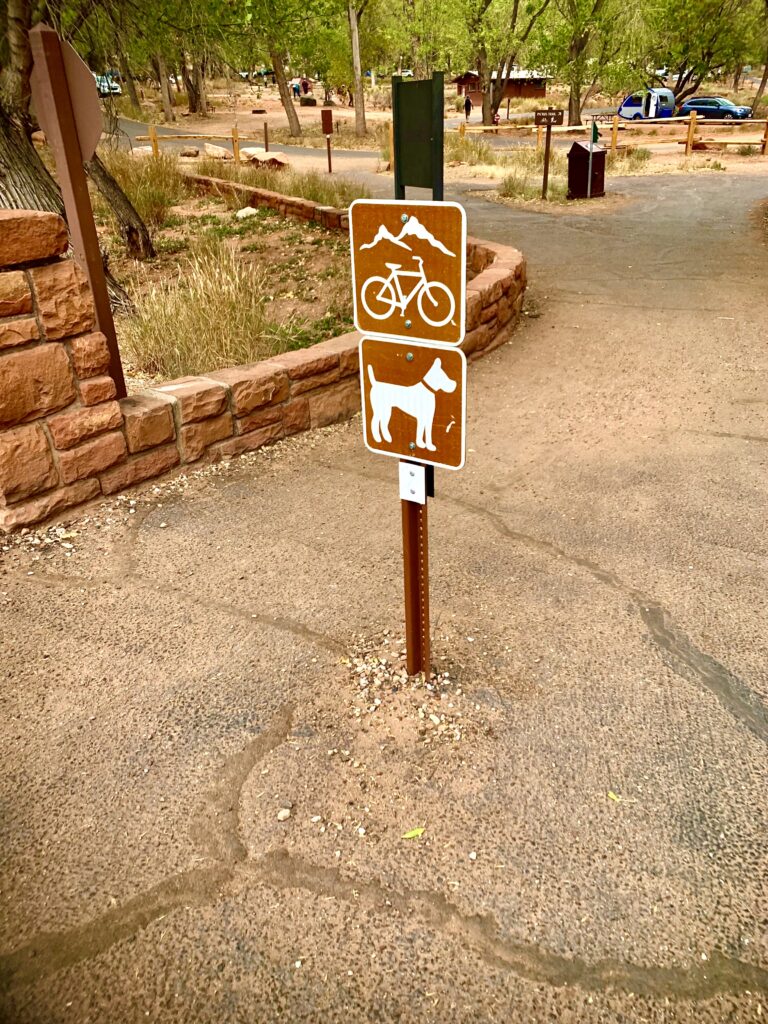
At Zion National Park, pets are generally allowed only in certain developed areas and on the Pa’rus Trail, which is the park’s primary pet-friendly trail. Pets must be kept on a leash no longer than six feet.
The Pa’rus Trail is approximately 3.5 miles round trip and runs near the Virgin River.
There is little shade in some areas, so heat, sun exposure, and dehydration should also be part of your planning.
The National Park Service recommends carrying plenty of water for both yourself and your dog and avoiding walking pets during the hottest part of the day.
And here’s the big one:
Keep your dog out of the water.
Zion currently advises keeping pets out of the Virgin River and other waterways because harmful cyanobacteria and cyanotoxins may be present.
So… Should You Bring Your Dog to Zion? 🤔🐾
This is where we want to be completely honest.
Zion National Park is absolutely spectacular.
But if your goal is to spend an entire day hiking numerous trails with your dog, Zion has significant pet restrictions that you need to consider before making the trip.
And because water safety conditions can change, you’ll need to check the current cyanobacteria information before deciding whether the Pa’rus Trail is appropriate for your dog.
For our particular trip in 2021, we decided the potential risk wasn’t worth it.
Your decision may be different based on current conditions, your dog’s behavior around water, and your travel plans.
The important thing is to know the information before you go.
Good News: Zion Is Still Worth Visiting! 🏔️❤️
Even though our plans changed, our visit still reminded us why Zion is one of the most famous National Parks in the country.
The scenery is breathtaking.
The towering cliffs are unbelievable.
And the drive into the area alone is an adventure.
Our advice?
If Zion is high on your bucket list and you’re traveling with a dog, consider your options carefully.
You may decide to:
🐾 Visit the park with your dog and stick strictly to approved pet areas.
🐾 Check current water and safety conditions before going.
🐾 Explore nearby dog-friendly areas outside the park.
🐾 Arrange appropriate care for your dog and visit Zion without them.
The National Park Service notes that nearby boarding options are available in communities including Springdale, Rockville, Hurricane, St. George, Kanab, and Cedar City.
Our Biggest Travel Lesson From Zion 🐶❤️
Sometimes the best travel decision is knowing when to change your plans.
We went to Zion hoping to hike with our dog.
Instead, we took a few pictures, spoke with some wonderful rangers, and decided to leave.
Was that the adventure we originally imagined?
No.
But it was the right decision for our dog.
And that’s one of the most important lessons we’ve learned while traveling with our four-legged family member:
The adventure is never more important than their safety.
There will always be another trip.
Another trail.
Another National Park.
Another adventure.
Our dogs only get one life.
And we want to make sure they are around to enjoy as many adventures as possible. ❤️🐾