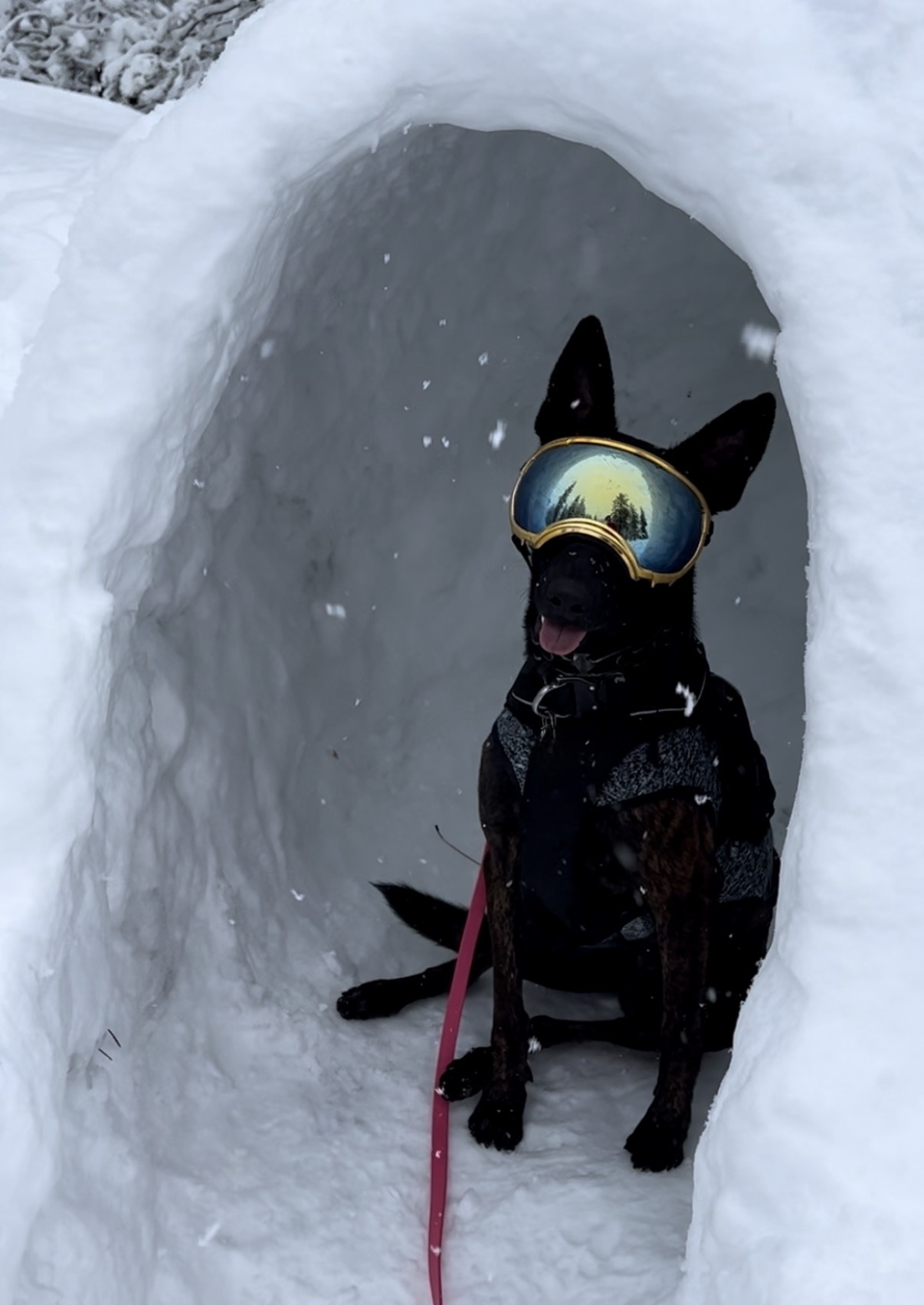
What we bring, how we prepare for changing weather, and what dog owners should know before heading into the cold.
There’s something magical about the mountains in winter. Snow-covered trees, crisp mountain air, beautiful scenery, and that wonderful feeling of being outdoors when the landscape looks completely different from summer.
We love it!
We’ve spent years skiing, hiking, and exploring mountain destinations, including Mammoth Lakes and Lake Tahoe. And when our dogs join us, we want them to enjoy those adventures, too.
But here’s something we’ve learned from years of outdoor experiences:
The right equipment can make the difference between an enjoyable adventure and a miserable—or even dangerous—one.
That doesn’t mean buying every piece of winter dog equipment available. It means understanding the conditions, knowing your dog’s needs, choosing appropriate gear, and knowing when it’s time to change your plans.
Our approach is simple:
Plan. Prepare. Then Play! 🐾
And that philosophy is especially important when rain, wind, snow, ice, and cold temperatures enter the picture.
Affiliate Disclosure: This post may contain affiliate links, including links through Amazon Associates and K9 Ops USA. If you purchase through these links, we may earn a small commission at no additional cost to you. Our recommendations are based on our own experiences, and we clearly identify products we haven’t personally tested. As an Amazon Associate I earn from qualifying purchases.
❄️ Cold-Weather Adventures at a Glance
| What to consider | |
|---|---|
| 🌡️ Weather | Temperature, wind, precipitation, visibility, and changing conditions |
| 🐕 Your dog | Size, coat, age, health, fitness, cold tolerance, and experience |
| 🧥 Clothing | Appropriate insulation, rain protection, fit, and avoiding overheating |
| 🐾 Paws | Protective boots, socks, paw wax, ice buildup, sharp surfaces, road salt, and deicers. |
| 🥽 Eyes | Bright reflected sunlight, blowing snow, and suitable eye protection |
| 💧 Water & food | Drinking water, hydration, and nutritious, energy-rich snacks for longer or more strenuous outings. |
| 🏔️ Terrain | Hidden obstacles, deep snow, frozen water, and unstable footing |
| 🚗 Afterward | Drying supplies, a blanket, paw checks, and a warm place to recover |
Our most important reminder: A destination being dog-friendly doesn’t automatically mean the weather or conditions are appropriate for your dog.
1. PLAN: Know What You’re Heading Into
🌡️ Cold Weather Is More Than a Number
It’s tempting to look at the temperature and decide whether it’s too cold for your dog.
But it’s not that simple.
A healthy, active dog with a thick coat may be comfortable in conditions that are difficult for a small, short-haired dog. Puppies, older dogs, and dogs with certain medical conditions may also have different needs.
Then add wind, rain, wet fur, snow, altitude, and the amount of time you’ll be outdoors.
Suddenly, the temperature alone doesn’t tell the whole story.
A short walk near your hotel is also very different from spending hours exploring snowy terrain.
We don’t use one universal temperature chart to decide whether an outing is safe. We consider the conditions, our dog’s individual needs, and how they’re responding.
If our dog is uncomfortable, struggling, or showing signs of getting too cold, we’re prepared to shorten the outing or head back.
🌧️ Rain and Wind Deserve Respect, Too
When people think about winter adventures, they often picture snow.
But cold rain and wind can create serious problems of their own.
Wet fur can reduce a dog’s ability to stay warm, especially when combined with wind and falling temperatures. Depending on the conditions and the dog, prolonged exposure can become dangerous.
That’s why we think of our dogs’ jackets as outdoor equipment—not simply cute clothing.
A rain shell should provide meaningful protection from wet weather. An insulated coat should help retain warmth. And everything should fit properly and allow comfortable movement.
We choose clothing based on the conditions, sometimes using one layer and sometimes combining layers.
But there’s another side to this:
More clothing isn’t always better!
Dogs can overheat, even in cool weather, especially during strenuous activity or when they’re wearing too much insulation.
Our goal isn’t to bundle our dog up as much as possible. It’s to provide the protection they actually need.
🏔️ Don’t Forget the Altitude
We love mountain destinations, but elevation can make an outing more demanding.
Dogs, like people, can experience altitude-related illness. A dog who seems unusually weak, unsteady, exhausted, or has difficulty breathing may need urgent attention.
We pay attention to how our dog is adjusting, avoid pushing too hard, and remember that cold weather and physical exertion can add to the challenge.
If your dog develops concerning symptoms at elevation, stop the activity, move to a lower elevation when it is safe to do so, and seek veterinary care.
And whether we’re hiking at altitude or closer to sea level, we never assume that cold weather means hydration is less important.
🦌 Wildlife Doesn’t Take the Winter Off!
A snow-covered landscape may look peaceful, but that doesn’t mean we’re the only ones out there!
Wildlife behavior changes with the seasons.
Food availability, breeding seasons, weather, and the need to conserve energy can all influence how animals respond to people and dogs.
In winter, some animals are working hard to conserve the energy they need to survive. Being chased or disturbed by a dog can have serious consequences.
Animals that have learned to associate people with food may also approach developed areas more boldly.
We follow leash requirements, keep our dogs under control, and give wildlife plenty of space.
A friendly, curious dog can still create a dangerous wildlife encounter.
🗺️ Have a Plan—and a Backup Plan
Before heading out, we check current weather, trail conditions, access restrictions, and the forecast for the entire outing—not just the time we expect to start.
We also consider daylight, road conditions, and whether we’re prepared to return safely if the weather changes.
If we’re heading somewhere remote, someone should know where we’re going and when we expect to return.
For more on planning, packing, and preparing for a hike, see our Day Hiking With Your Dog: What to Pack & How to Prepare for a Safer Hike.
2. PREPARE: What We Use for Cold-Weather Adventures
🧥 Our Dog’s Winter Clothing: Different Gear for Different Conditions
We’ve spent years enjoying mountain environments, sometimes in very cold conditions.
One thing we’ve learned is that good outdoor equipment should serve a purpose.
We apply that same thinking to our dogs.
Here are some of the pieces we’ve used and how they fit into our routine.
Kurgo Core Sweater
We use our Kurgo Core Sweater by itself when conditions warrant a lighter layer, or underneath another jacket or vest when additional insulation makes sense.
Kurgo Loft Jacket
Our Kurgo Loft Jacket is useful for winter mountain walks when it’s cold but not extremely cold.
We also like it when we’re going in and out of businesses, where a heavier insulated garment may be unnecessary.
Kurgo Halifax Rain Shell
For rainy conditions, we use the Kurgo Halifax Rain Shell.
Keeping a dog dry can be just as important as keeping them warm, particularly when cold temperatures and wind are involved.
Ruffwear Powder Hound Waterproof Insulated Vest
For colder conditions, we use the Ruffwear Powder Hound Waterproof Insulated Vest.
This provides more substantial weather protection than our lighter layers.
We also own another Kurgo waterproof and windproof jacket that has served us well, but it’s no longer being sold, so we’re not including it as a current product recommendation.
A note about fit: Before winter trips, we try our dog’s clothing on again. Just because something fit last year doesn’t mean it still fits today. Dogs change size, too! 😂
🐾 Boots, Socks, and Paw Protection
Winter surfaces can be surprisingly hard on a dog’s feet.
Snow can accumulate between toes, ice can irritate or injure paw pads, and road salt or chemical deicers may cause painful irritation.
That’s why paw protection is an important part of our winter routine.
Kurgo Blaze Boots and Socks
We’ve used Kurgo Blaze Dog Shoes (They come in sets of two but remember that your dog has 4 feet) for years, along with Kurgo Blaze Dog Socks.
We’ve been very happy with the boots, especially because keeping dog footwear properly fitted and securely in place can be challenging.
The socks are part of our established footwear system.
At the time of writing, we couldn’t confirm the Blaze shoes were still available directly from Kurgo, although we’ve seen them through other retailers. We don’t know whether they’re being discontinued, redesigned, or temporarily unavailable.
We’ll continue using the equipment we already own while it’s working well, and we’ll investigate alternatives if we eventually need replacements.
Whatever boots you choose, make sure they fit correctly and don’t rub, restrict movement, or interfere with your dog’s footing.
Musher’s Secret Paw Wax
One product we keep coming back to is Musher’s Secret.
We’ve used it for years, and it has earned a permanent place in our dog-travel supplies.
From late fall through winter and into spring, we don’t leave home without it.
Paw wax can provide an additional protective barrier, but it doesn’t replace boots when conditions call for more substantial protection.
And regardless of what we’re using, we still check our dog’s paws during and after outings.
🐾 Don’t Just Pack It. Practice With It!
Have you ever watched a dog try on boots for the first time?
HAHAHAHA! They can walk like they’ve suddenly forgotten how their legs work!
We’ve learned that buying good equipment is only part of preparing for an adventure.
Before our trips, we watch the video of the manufacturer’s instructions for properly fitting, putting on, and removing our dogs’ equipment.
Then we let our dogs practice wearing it in a familiar environment.
That includes boots, socks, sweaters, jackets, and goggles.
We took the time to teach each of our dogs how to walk comfortably in their boots before we needed them on an actual trip.
The first time your dog wears new equipment shouldn’t be when you’re depending on it to keep them safe and comfortable.
We also check for rubbing, restricted movement, discomfort, and whether the equipment stays in place.
If a dog can’t become comfortable wearing something, we don’t assume they’ll simply get used to it once we’re out on the trail.
🥽 Rex Specs: Eye Protection for Snowy Adventures
Snowy adventures aren’t always dark and stormy.
Sometimes the sun comes out, and the light reflecting off the snow can be intense!
Blowing snow can also make conditions uncomfortable.
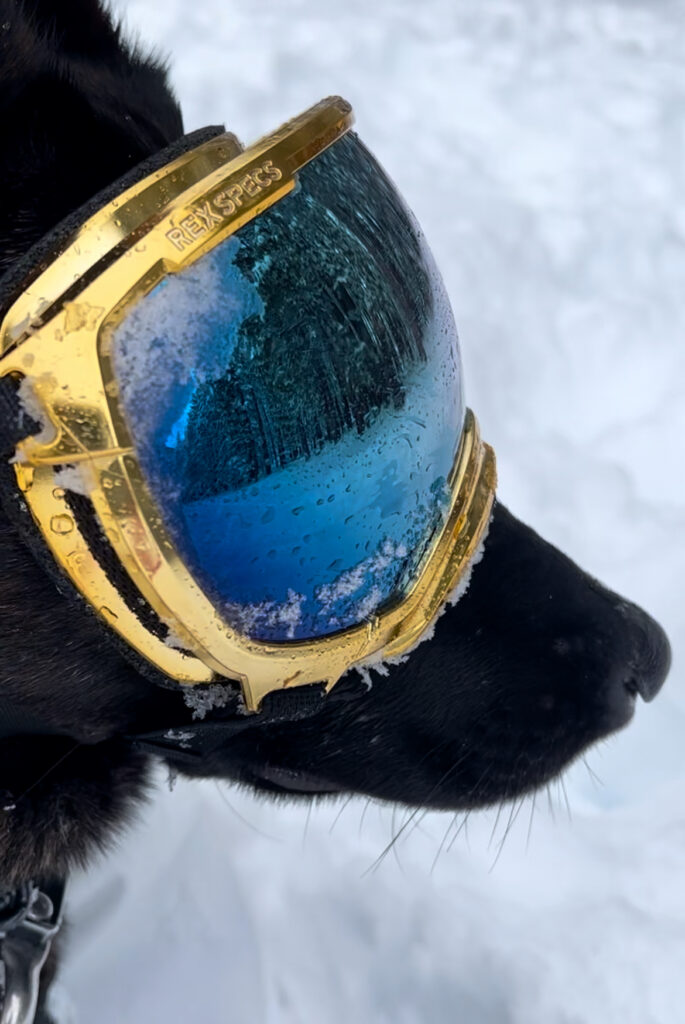
We use Rex Specs Dog Goggles for eye protection when conditions warrant it.
One feature we appreciate is the interchangeable lenses. We have several different lenses and can change them depending on the conditions.
Darker lenses can help reduce brightness in sunny conditions, while clear UV-protective lenses may be appropriate when we want protection without darkening our dog’s vision.
We trained Gerty to wear her goggles, and she became comfortable using them during our adventures at Coral Pink Sand Dunes and in snowy environments.
Now it’s Ringo’s turn to learn!
Goggles require the same patience and preparation as boots. We introduce them gradually and practice before the adventure.
And although goggles can be useful, they don’t replace avoiding severe weather or conditions that are unsafe for our dog.
🔦 Don’t Forget Visibility
Winter days are shorter, and snow, fog, or changing weather can make visibility worse.
We’ve used the Ruffwear Beacon Safety Light for years.
It’s rechargeable, waterproof, and offers different light colors and modes. We appreciate being able to make our dog more visible in low-light or poor-visibility conditions.
Of course, a dog safety light doesn’t replace carrying appropriate lighting for ourselves.
💧 Water and Snacks Still Matter!
It’s easy to remember water on a hot summer hike.
But when we’re bundled up in winter clothing and surrounded by snow, hydration may not be the first thing on our minds!
We carry water for ourselves and our dog on winter outings, just as we do in warmer weather.
At higher elevations, we’re especially mindful of staying hydrated.
We’ve had good experiences carrying water in our backpacks, but exposed bottles and drinking systems may need additional protection in freezing conditions so the water remains accessible.
And don’t rely on snow to keep your dog hydrated! Snow contains relatively little water for its volume, and eating large amounts can contribute to chilling. Snow may also contain harmful contaminants, such as road deicers or animal waste, or hidden debris. Always carry fresh drinking water for your dog and offer it regularly.
We also bring suitable food or treats for longer, more demanding adventures.
We’ve noticed that moving through snow can take considerably more effort than walking on a clear trail. Dogs may expend additional energy, too.
That doesn’t mean every dog needs extra calories simply because it’s winter. Activity level, conditions, duration, and the individual dog matter.
🆘 Our Emergency Bivy: Extra Protection, Not a Winter Sleeping Bag
For certain outings, we carry an XL two-person reflective emergency bivy as part of our hiking emergency supplies. We chose the larger size to allow room for both a person and a dog if we ever needed to shelter together.
Thankfully, we’ve never had to use it in an emergency!
Important: A reflective emergency bivy is temporary survival equipment designed to help reduce heat loss. It does not generate heat, provide the insulation of a proper winter sleeping bag, or make sleeping outdoors in freezing conditions safe. Anyone sharing one with a dog must have adequate space and ventilation, with breathing passages unobstructed.
It is not a substitute for appropriate winter clothing, shelter, rescue, or necessary medical or veterinary care.
3. THEN PLAY! Enjoy the Adventure—But Watch the Conditions
❄️ What You Can’t See Beneath the Snow
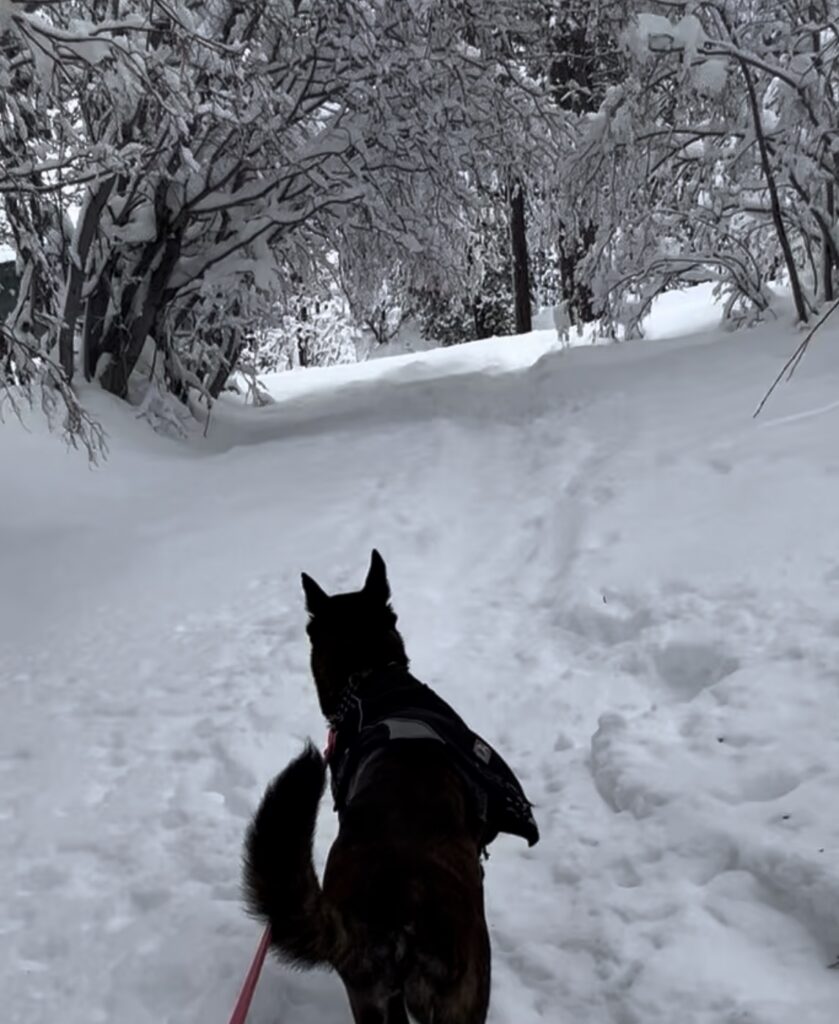
A snow-covered trail can look beautiful, peaceful, and surprisingly easy to follow.
But we’ve learned that what you can’t see beneath the snow deserves just as much attention as what you can.
Stay aware of where the packed trail ends.
Sometimes the snow underfoot is firm because other people have walked over it, while just inches away the snow may be deep, soft, and difficult to move through.
Fresh snow can conceal sharp branches, rocks, fallen trees, holes, and uneven ground.
A dog bounding happily into untouched powder may encounter hazards that aren’t visible from the surface.
Be especially cautious around snow-covered water.
Streams, ponds, and drainage areas can be hidden beneath snow or thin ice. What appears to be solid ground may not support you or your dog.
Deep snow creates another danger: entrapment.
A person or dog can sink into loose snow and struggle to climb out. Snow also makes movement more tiring, particularly for dogs who aren’t accustomed to it.
🌲 A Word About Trees and Deep Snow
Trees may look like a good place to take shelter, but deep snow around their trunks can conceal dangerous pockets known as tree wells.
Falling into one can cause entrapment and, in severe circumstances, suffocation.
Tree-well fatalities are most often associated with skiing and snowboarding in deep powder, but the underlying hazard is worth understanding when exploring snowy mountain terrain.
We don’t allow our dogs to investigate deep snow around tree trunks, and we avoid those areas ourselves.
Sometimes the safest winter adventure is the one where we turn around before something goes wrong.
🐾 Check Those Paws Along the Way
Snow and ice can accumulate between toes and in longer fur around the legs and belly.
These icy clumps can become uncomfortable or painful.
We check our dog’s feet regularly, watch for changes in their walking, and remove accumulated ice gently rather than pulling at frozen fur.
After walks near treated roads or sidewalks, we also clean and inspect paws to remove salt and deicing residue.
Boots and paw wax can help, but neither eliminates the need to pay attention.
🚨 When Cold Becomes Dangerous
Cold-weather discomfort and a medical emergency are not the same thing.
We watch for early signs that our dog isn’t comfortable, such as repeatedly lifting paws, reluctance to continue, shivering, or seeking shelter.
A dog experiencing hypothermia may show more serious signs, including weakness, lethargy, stiffness, poor coordination, confusion, or collapse.
Severe hypothermia can be life-threatening, and a severely affected dog may stop shivering.
Frostbite can also occur, particularly on exposed areas such as ears, tails, and paws. Affected skin may be unusually cold, pale, discolored, painful, or swollen, although changes may not be obvious immediately.
If you suspect hypothermia or frostbite, get your dog out of the cold and seek prompt veterinary care.
Move them into a sheltered, warm environment and replace wet coverings with dry blankets or towels while arranging help.
Do not use direct high heat, heating pads against the skin, vigorous rubbing, or hot baths to try to rapidly warm an affected dog. These methods can cause additional injury.
Suspected severe hypothermia is an emergency. Don’t delay veterinary treatment while attempting to manage it yourself.
For more information, consult Cornell University’s Winter Safety Tips, the ASPCA’s Cold Weather Safety Tips, and your veterinarian.
You can also review our Dog First Aid: How to Prepare for Injuries, Travel & Emergencies.
🚗 Back at the Car: Dry, Warm, and Comfortable
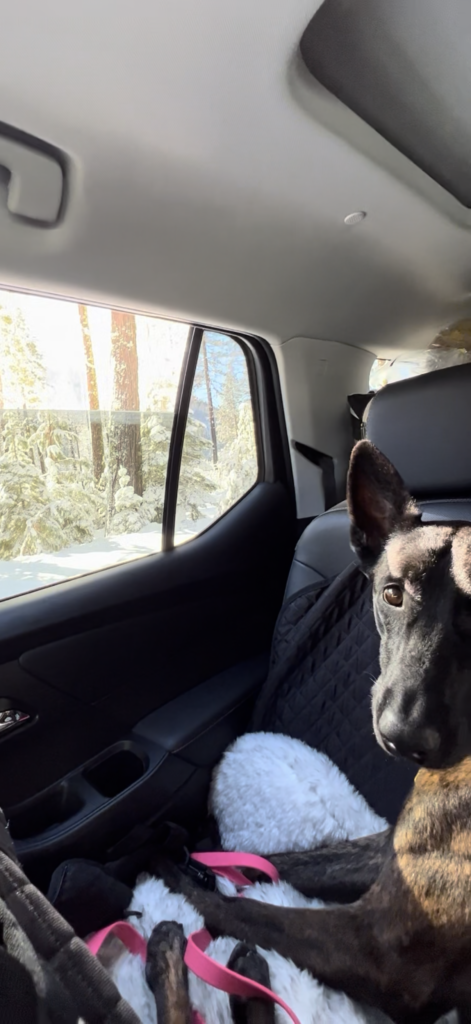
Our pup is resting on a fluffy dog bed inside the car after a winter hike, with snow-covered trees visible through the window.
Our cold-weather preparation doesn’t end when we finish the hike!
We keep our Soggy Doggy towel, a comfy dog bed, and a blanket waiting in the vehicle or back where we’re staying.
We don’t carry the large towel on the trail. It’s there when we return.
After a wet or snowy outing, we dry our dog’s coat, legs, belly, and paws, checking for ice buildup or irritation.
Once our dog is dry, we have a blanket ready to help them get comfortable and warm if they’re cold.
Important: Our blanket is for ordinary post-adventure warmth and comfort. It is not emergency treatment. If our dog shows signs of hypothermia or another medical emergency, we seek veterinary care rather than relying on a blanket.
We also don’t assume that leaving a dog alone in a cold vehicle is safe. A parked vehicle is not an appropriate substitute for a warm, supervised place to rest.
🧥 Winter Equipment We’re Interested in Trying
Outdoor equipment keeps improving, and we’re always interested in something that might make our adventures safer or easier.
Two additions we’re considering are:
- The Ruffwear Dirtbag Wearable Dog Towel, which is designed to help absorb moisture after wet or muddy adventures.
- The Ruffwear Powder Hound Jacket and Powder Hound Coverall, which offer different levels of body and leg coverage for winter conditions.
We haven’t tried these products yet, so we’re not offering firsthand recommendations.
But their designs address some of the challenges we’ve encountered, and we’re interested in seeing how they perform in real life.
If we test them, we’ll share what we learn—including anything that doesn’t work as well as we hoped.
🧳 Our Cold-Weather Dog Adventure Packing Checklist
🐕 What Our Dog May Wear
- Weather-appropriate sweater, insulated jacket, or rain shell
- Properly fitted protective boots and socks, when needed
- Dog goggles when conditions warrant eye protection
- Ruffwear Beacon safety light for low-light or poor-visibility conditions
- Secure collar or harness with current identification
Not everything needs to go on the hike! We organize our gear according to where we’ll actually use it.
🐕 What Our Dog May Wear
🎒 What We Carry on the Outing
- Leash (We use K9-Ops USA Biothane Leash) and required restraint equipment
- Water for our dog and ourselves
- Collapsible or portable dog water bowl
- Appropriate nutritious, energy-rich dog snacks or food
- Dog first-aid supplies
- XL two-person reflective emergency bivy (when conditions warrant it)
- Musher’s Secret paw wax
- Dog waste bags
- Weather-appropriate human gear, lighting, and navigation supplies
- Any additional emergency equipment appropriate for the outing
🚗 What Waits in the Car or at Our Accommodations
- Soggy Doggy towel
- Dry blanket
- Spare dry dog clothing or footwear, if appropriate
- Additional water and supplies
- A plan for getting our dog into a warm, sheltered environment
Remember: This is our starting point, not a requirement to bring every item on every outing. The weather, location, activity, and individual dog determine what makes sense.
🐾 Plan. Prepare. Then Play!
We love winter adventures with our dogs.
There’s something special about experiencing a familiar destination when it’s covered in snow or watching our dogs explore a landscape that looks completely different from the last visit.
But winter adventures deserve thoughtful preparation.
The right gear can help. Practicing with that gear matters. Understanding the conditions matters even more.
And sometimes the best decision we make for our dog is choosing a shorter walk, changing our plans, or heading back before conditions become dangerous.
Because the goal isn’t simply to get out there.
It’s to enjoy the adventure and bring everyone home safely. 🐾❄️